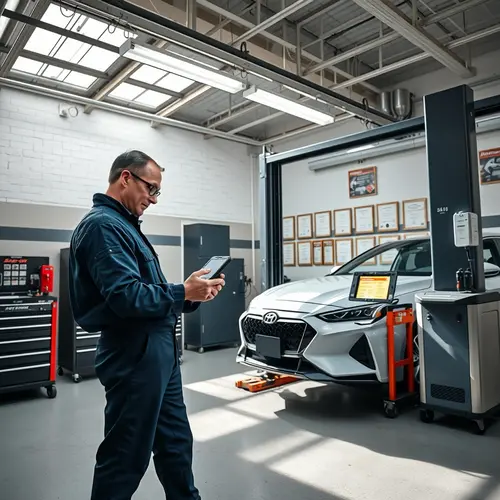
auto mechanic career
Auto Mechanic Career: The Essential Truth & 5 Steps to Six Figures
An auto mechanic career offers a direct path to high earnings without student loan debt, provided you treat it like a skilled trade rather than just a job. The demand for technicians who can diagnose complex electrical systems and hybrid drivetrains far exceeds the current supply.
Why the auto mechanic career Path Pays Off
Forget the grease-monkey stereotype. Modern shops run on scan tools, oscilloscopes, and service information databases. According to the Bureau of Labor Statistics, the median pay for automotive service technicians sits comfortably above the national average for all occupations, with the top 10 percent earning significantly more. Flat-rate pay structures reward efficiency. If you turn hours faster than the book time, your effective hourly rate climbs fast. Dealerships and independent specialists both fight for talent, creating leverage for the technician.
Certifications That Define an auto mechanic career
ASE (National Institute for Automotive Service Excellence) certification remains the industry gold standard. It separates parts-swappers from diagnosticians. Manufacturer-specific training — Ford FACT, GM ASEP, Toyota T-TEN — adds immediate value. These programs often guarantee placement. Master Technician status unlocks the highest pay bands and management tracks. Shops displaying the Blue Seal of Excellence typically see higher customer retention rates, per industry surveys by the Automotive Service Association.
| Credential Level | Typical Scope | Earning Impact |
|---|---|---|
| Entry / Lube Tech | Maintenance, tires, brakes | Base hourly + overtime |
| ASE A1-A8 Certified | Systems repair, diagnostics | Flat-rate eligibility |
| Master Technician | All systems, mentoring | Top 25% pay bracket |
| OEM Specialist / Master | Brand-specific advanced diag | Highest flat-rate multipliers |
The Tool Investment Reality Auto Mechanic Career
You cannot build a sustainable auto mechanic career on a shop’s communal toolbox. A professional tool inventory costs $25,000 to $50,000 over time. Start with a high-quality roll cab, 1/4, 3/8, and 1/2 inch drive ratchets, sockets, wrenches, and a reliable torque wrench. Add a professional-grade scan tool with bi-directional control and graphing capability as soon as possible. Snap-on, Matco, and Mac offer financing plans, but buying used premium brands on the secondary market saves 40 percent without sacrificing warranty coverage on hand tools.
- Prioritize diagnostic equipment over specialty mechanical tools early on.
- Insure your toolbox against theft and fire immediately.
- Buy impact sockets separately; chrome sockets shatter under impact guns.
Expert Auto Mechanic Career: The Diagnostic Trap
I watched a young tech replace three oxygen sensors on a V6 because the scanner showed “Bank 1 Sensor 1” codes. He never checked fuel trims or looked for a vacuum leak downstream of the MAF. The real issue? A cracked intake manifold gasket leaning out the whole bank. He billed 2.5 hours in parts swapping. A smoke test and live data analysis would have taken 0.5 hours. The difference between a parts changer and a diagnostician is the discipline to verify the root cause before touching a wrench. That discipline defines a lasting auto mechanic career.
Auto Mechanic Career Work Environment: Dealership vs. Independent
Dealerships offer structured training pipelines, warranty work stability, and specialized tool access. The trade-off is repetitive warranty flat rates that often pay less than customer-pay work. High-volume independent shops usually offer higher effective hourly rates on customer-pay tickets and more variety. Specialty shops — European, diesel, performance — demand deeper knowledge but command the highest labor rates in the market. Visit the shop before accepting an offer. Look at the loop. Clean floors, organized benches, and happy writers usually mean a functional management structure.
Auto Mechanic Career – Physical Longevity Strategies
This trade breaks bodies. Knees, backs, and shoulders absorb the punishment. Invest in a creeper with a seat, knee pads, and nitrile gloves to reduce chemical absorption. Use lifts properly; never crawl under a vehicle on jack stands for extended work. Rotate tasks to avoid repetitive strain. Many veterans transition to mobile diagnostics, shop foreman roles, or technical training positions after 20 years. Planning that exit strategy early protects your earning power.
Choosing an auto mechanic career means committing to lifelong learning. The vehicle parcel shifts toward electrification and ADAS calibration. Technicians who embrace the physics behind the code will always command a premium.