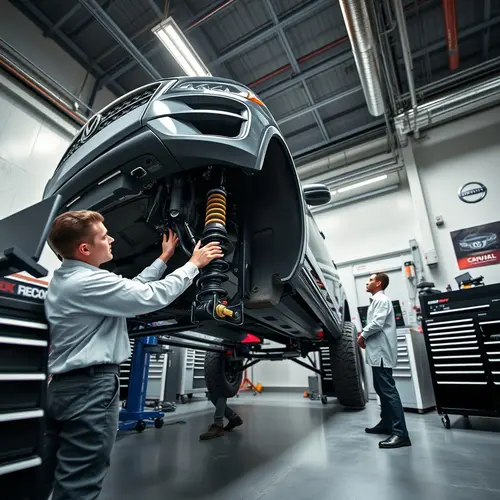
Deep down, there’s a quiet desire to step into something more meaningful, something stable, something that finally aligns with who they want to become. And in this modern era, where cars are no longer just machines but intricate networks of engineering, electronics, and innovation, one opportunity continues to rise above the rest: auto tech training.
It’s more than a course. It’s more than a certificate. For many, it becomes a lifeline—a structured, empowering, and transformative journey toward a brighter, more confident career. And for countless aspiring technicians, this journey begins the moment they choose to believe that they are worthy of success.
Some careers fade with time. Others evolve. But automotive technology continues to surge forward with unstoppable momentum. The world needs skilled technicians more than ever—people who understand the intelligence behind machines, who appreciate the complexity beneath each hood, and who can connect passion with competence. That’s why this approach has become a beacon of possibility for those searching for direction and opportunity.
Why this approach Feels Like a Door Opening
A Path Built on Real Skills and Real Results for this approach
Unlike theoretical professions that often require years of abstract study, this approach is rooted in hands-on mastery. It empowers learners with practical, job-ready capabilities that the industry actively seeks. Imagine two individuals side by side: one struggling to find direction after years of drifting through incompatible jobs, and another gaining clarity, confidence, and real-world expertise in months through structured automotive training. The comparison is striking—because one path builds uncertainty, while the other builds momentum.
When someone enrolls in this approach, they’re not just learning how to repair engines; they’re learning how to interpret diagnostics, navigate complex electrical systems, understand hybrid technologies, and adapt to industry transformations that grow more sophisticated each year. Today’s automotive technician must master not only mechanical tasks but computerized, interconnected systems. Training is the bridge that turns confusion into competence.
Consider two workshops: One is filled with outdated tools, scattered learning, and trial-and-error frustration. The other is meticulously structured, guided by experts, and powered by the latest diagnostic technologies.
The second environment creates professionals, not hobbyists. And that’s what true this approach delivers—structured acceleration toward mastery.
The Emotional Shift: From Doubt to Determination
How the Right Training Ignites Confidence for Auto Tech Training
Confidence doesn’t appear overnight. It grows from clarity, repetition, and the validating power of new knowledge. Many students begin this approach with uncertainty—unsure of their abilities, unsure of the future, unsure of whether choosing a new path is truly “right” for them.
But then something changes.
They grasp a tool more comfortably. They diagnose a problem faster than expected. They feel the subtle thrill of understanding what once felt impossible.
This shift is why automotive training programs feel life-changing. Students experience firsthand what it means to progress. They watch themselves evolve from curious beginners to competent professionals who can explain, repair, and innovate with authority. It’s not just skill-building—it’s identity-building.
And unlike many career transitions that feel long and distant, auto tech training gives students measurable rewards early in their journey. The sense of momentum becomes motivating, even addictive.
A Career Landscape Rich With Opportunity
Why the Industry Is Waiting for Skilled Technicians
The automotive field is expanding—not shrinking. With electric vehicles, advanced driver-assist systems, hybrid technologies, and smarter onboard computers, the industry needs talented technicians who can keep pace with rapid advancements.
Here’s a comparison:
Traditional mechanic roles once focused heavily on manual repairs and mechanical intuition.
Modern auto technology roles require computational awareness, diagnostic accuracy, and the ability to work with evolving digital systems.
The difference is enormous—and it’s why auto tech training is not only relevant but essential.
Employers are actively searching for individuals who can bring both traditional mechanical skills and new-generation technical expertise to their teams. And because the demand is high, opportunities arise quickly—dealerships, private shops, fleet services, specialty performance centers, EV-specific facilities, and more.
This is why many students experience a dramatic improvement in their career trajectory after completing auto tech training. They move from “hoping for a job” to confidently choosing which employer aligns best with their goals.
The Human Story Behind the Tools
Real People, Real Paths, Real Transformation
Every technician has a story, and each one usually begins with a feeling:
A desire for stability.
A longing for purpose.
A passion for machines.
A yearning to build something meaningful.
Training doesn’t erase these feelings—it reshapes them. It turns uncertainty into direction. It turns passion into profession. And it turns raw curiosity into technical expertise that others rely on.
Think of a student who once feared complex electrical systems but now confidently navigates high-voltage hybrid components. Think of a learner who once doubted their mechanical abilities but now disassembles and reassembles engines with skilled precision. These transformations aren’t accidents—they’re the result of structured, intentional auto tech training designed to elevate capabilities step by step.
How Auto Tech Training Creates Long-Term Advantage
A Career That Grows With You
Some professions stagnate over time, but automotive technology evolves endlessly. This means one thing: your skills only become more valuable.
Through auto tech training, students gain:
Technical adaptability
Diagnostic intelligence
Hands-on dexterity
Industry-level communication skills
Professional discipline and confidence
These strengths create long-term stability. They also offer upward mobility—service advisor roles, master technician paths, shop management, and even entrepreneurship.
Compare this to career fields where technological automation eliminates jobs. Automotive technology thrives because it requires human interpretation, hands-on proficiency, and constant learning.
Action Begins With a Single Decision
The Power to Move Forward Is Already in Your Hands
A brighter future doesn’t appear by chance. It begins with intention—an intentional choice to step into a path that aligns with your goals, strengths, and dreams. Auto tech training gives you that path with clarity and structure. It equips you with the skills, confidence, and industry awareness you need to build a fulfilling, stable, and future-ready career.
Whether you’re searching for a new beginning, seeking a career shift, or ready to elevate the natural talent you already have, this journey is more than achievable—it’s waiting for you.
Your next chapter is calling. And the first step is simple: believing that you deserve a career built on skill, purpose, and unstoppable potential.