Getting Holographic displays right starts with knowing what to compare and what to ignore.
Hyundai developing holographic windshield display with Germany’s Zeiss
Technology enables augmented reality displays to span width of windshield
Production planned to start in 2027
In the not too distant future, head-up displays will be able to present a whole lot more than the tiny window of static information we’re used to today. Here is what matters most when you compare options for Hyundai wants turn windshields.
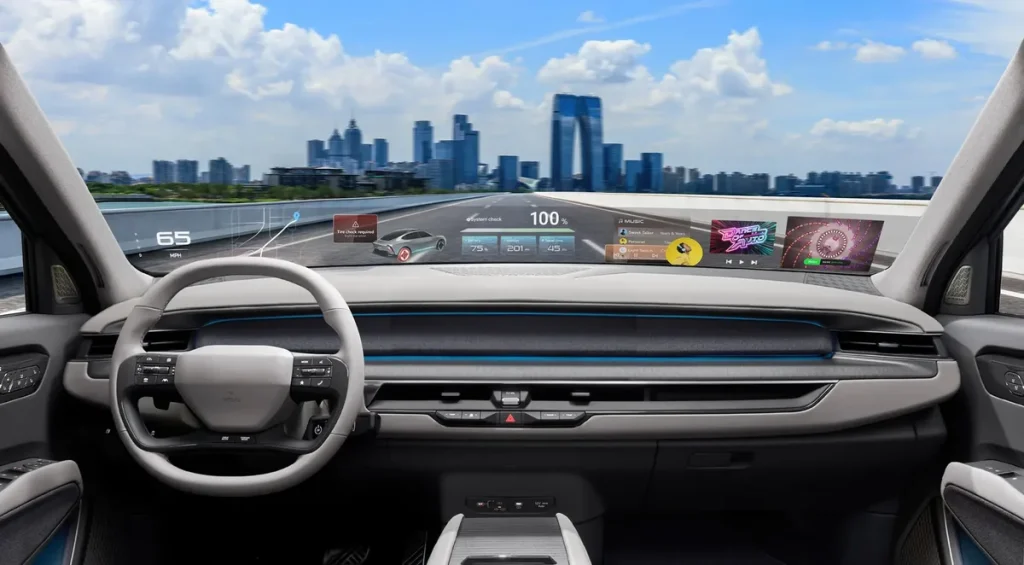
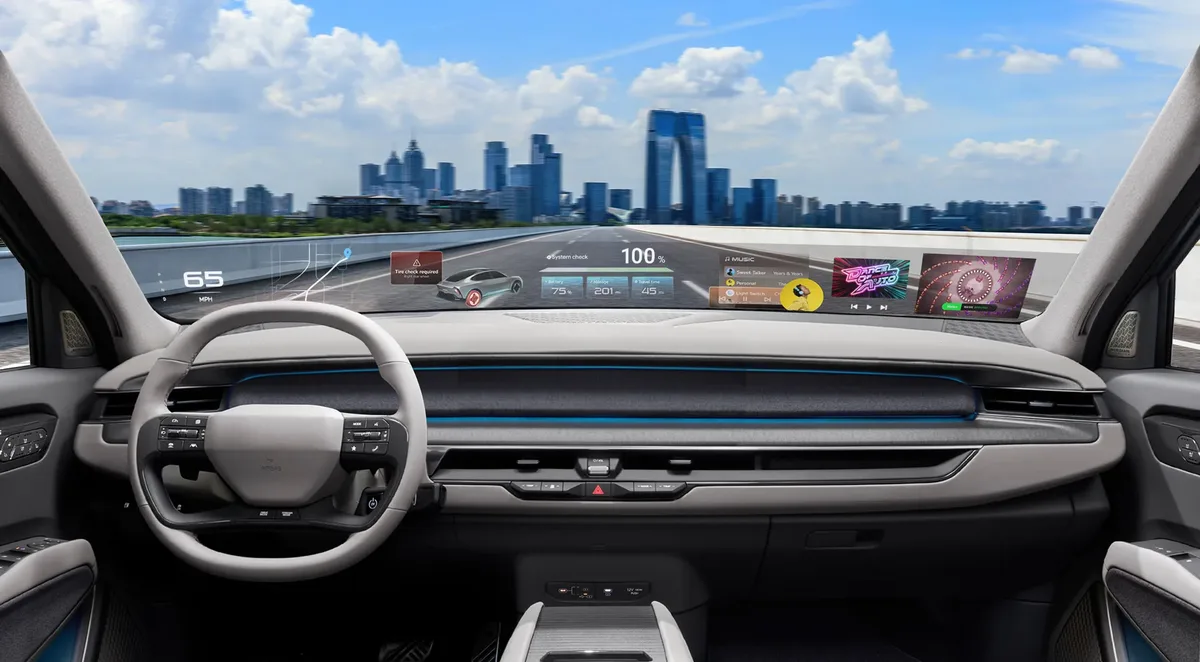
Hyundai is one of a growing number of automakers that plans to use the entire width of the windshield to display information, and announced on Oct. 13 a partnership with German optical company Zeiss to help develop the technology.
The key is holographic augmented reality technology, which could enable numerous possibilities, from showing you which turns to take on your selected route, the perfect racing line during track days, or highlighting potential dangers ahead—all without you having to take your eyes off the road.
The augmented reality aspect means the visuals are dynamic, meaning they can track moving objects, like a pedestrian, cyclist, or animal entering the road. A feed of traffic and weather information could also be displayed, using a cloud connection or other types of vehicle-to-infrastructure communications.
There could also be a section for a front passenger, for displaying media content, a video call, or information about the current location, like listing nearby restaurants or tourist attractions.
Hyundai said the technology may be introduced as soon as 2027, and that the introduction could end up changing the way vehicle cabins are designed. Since the traditional gauge cluster could be removed, the top of the dash could be mounted much lower, leaving more open space for a windshield.
The technology relies on a transparent film with a thickness less than a human hair being applied to the windshield. The film is then able to recreate images and video using light signals sent from LED-based projectors.
Ford displayed a prototype of a similar system in September, which the automaker is developing with a company called Ceres Holographics.
BMW previewed its own system last year in the i Vision Dee concept car and confirmed some form of the technology will make its way into next-generation electric vehicles referred to internally as the Neue Klasse family. The first Neue Klasse EV will be a compact crossover arriving in 2025.
Nissan’s design chief, Alfonso Albaisa, told Motor Authority in an interview earlier this year that screens in the dash will eventually be replaced by windshields capable of displaying all of the same information. And patents from General Motors also surfaced earlier this year showing a system that could potentially display information on all parts of the screen.
What should beginners know about Hyundai wants turn windshields?
Start with the basics covered above, apply one change at a time, and note what happens. That way you can tell which step actually made the difference instead of guessing.
How long does Hyundai wants turn windshields take to show results?
It depends on your starting point. Most readers see a clear difference after four to six weeks of consistent work, and sooner when they track results weekly.
In practice, Holographic displays works best when the basics are handled before anything else. A quick note on Holographic displays: the follow-up matters as much as the first decision. If Holographic displays feels overwhelming, start with the smallest step that produces a visible result.
Here is the short version of Holographic displays, including what to check first and what to ignore.
What should beginners know about Holographic displays?
Start with the basics covered above, apply one change at a time, and note what happens. That way you can tell which step actually made the difference instead of guessing.
How long does Holographic displays take to show results?
It depends on your starting point. Most readers see a clear difference after four to six weeks of consistent work, and sooner when they track results weekly.
Mistakes that cost time and money
The most common mistake with Holographic displays is treating the first option you find as the only option. Comparison is not busywork: differences in scope, support, and timing often matter more than the headline number.
The second mistake is ignoring the follow-up. Whatever you choose, plan how you will check that it worked. A quick review after two weeks catches problems while they are still cheap to fix, and it turns Holographic displays from a one-time decision into something you can improve.
What to check before you start
Before committing time or money to Holographic displays, it helps to know what a good outcome looks like. Write down the result you actually need, the budget you can live with, and the deadline you are working against. Those three answers rule out most of the options that look attractive but do not fit your situation.
Next, look at the details that are easy to miss: what is included, what costs extra, and what happens when something goes wrong. Ask directly about timelines and follow-up. A clear answer is usually a better sign than a low price, because Holographic displays is rarely a one-off purchase of attention.
A simple step-by-step approach
Start with the basics of Holographic displays and keep the first step small enough to finish in one sitting. Gather the information you need, compare two or three realistic options, and note the trade-offs in plain language rather than marketing terms.
Then test the decision on a small scale before you scale it up. This is the part most people skip, and it is the reason Holographic displays sometimes feels harder than it should. A short trial tells you more than another hour of reading, and it usually surfaces the one constraint that matters in your case.