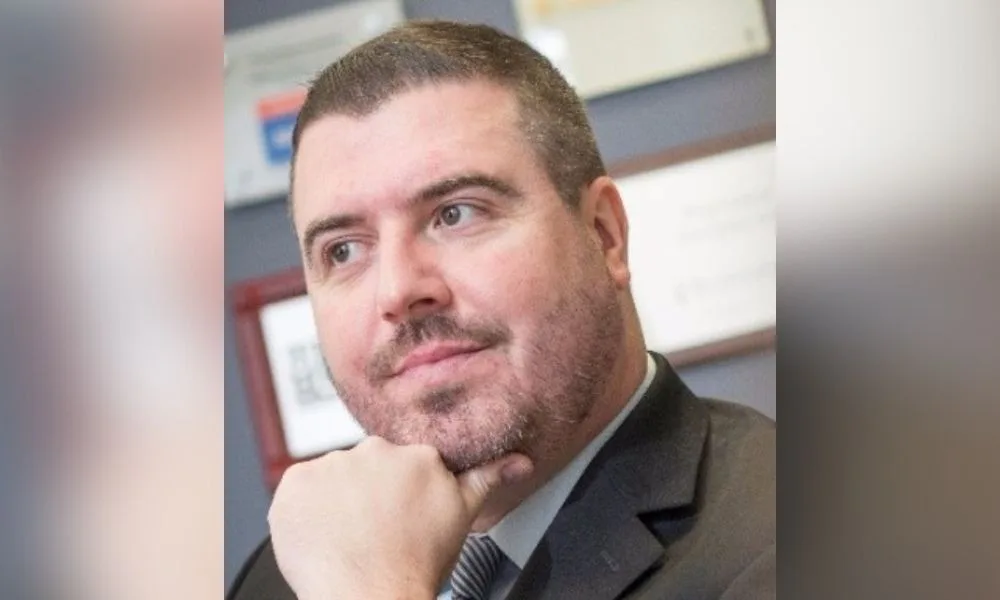
When it comes to balancing insurance solutions for businesses of all sizes, Sean Graham (pictured), president of Begin Insurance, is a big fan of the tailored approach. Whether insuring a home-based business or a large commercial enterprise, the risks vary significantly, and coverage must reflect that.
“Each business has its unique risks,” Graham says. “Our first step is to understand the client and their needs.”
The key to Begin Insurance’s process is what Graham describes as an “enterprise risk management approach.” This method allows them to determine a client’s risk profile and exposure.
“Once we’ve determined the client’s business and their needs, we tailor coverage to best suit their exposure,” Graham says. This customization ensures that in the event of a loss, clients are “adequately covered based on their needs.” Communication is a critical part of this process, as it helps clients understand not only what is covered but also any exclusions and assumed risks. As Graham puts it: “Open and continuous communication with the client is paramount.”
Graham illustrates this approach with a real-world example: a small business contractor approached Begin Insurance after facing a steep premium increase from their current insurer. Through detailed discussions and a review of the existing policy, Graham’s team identified coverage gaps and missing protections.
“We were able to find coverage for the client that included their commercial general liability (CGL), auto policy, and contents that were underinsured with their previous insurer,” he says. This “holistic approach” allowed the client to enhance coverage while saving money.
One of the significant trends Graham has observed is the shift toward more home-based businesses, particularly in the last five years. The major challenge with this shift is that many commercial insurance packages have not adapted to the new reality of remote work.
“A lot of these packages are covering them as if they have an office exposure, and that’s just not the reality these days,” Graham says. Many home insurance policies also fail to adequately cover business-related risks, making it crucial to bridge the gap between personal and commercial insurance.
In terms of liability protection, commercial general liability (CGL) remains foundational, but there are often overlooked coverages that can pose serious risks to business owners.
“The most commonly overlooked coverages might be cyber liability, contractual liability, and employment liability,” Graham says. While businesses may anticipate employee injuries, they often underestimate claims related to misconduct, discrimination, or other forms of negligence. Cyber liability is a particularly confusing area for many clients, and as Graham points out, it’s the broker’s job to educate clients on risks such as hacking and data breaches.
Cyber risks, in particular, have become a growing concern, especially in the context of business interruption. Graham explains that many businesses fail to consider the potential income loss exposure that can arise from cyberattacks or other disruptions.
“In a post-pandemic world, it’s important to understand the impacts to the global supply chain and how it has impacted both small and large businesses,” he says. Begin Insurance’s solution to minimizing downtime after an incident involves helping clients develop business continuity plans, ensuring they are prepared to pivot when necessary. “We can’t avoid all losses, but we can be prepared to minimize the impact.”
Contractors, one of Begin Insurance’s specialties, face myriad risks. Theft of equipment, breakdowns, and liability claims arising from subcontractors or employee injuries are just a few of the exposures that contractors need to address. Graham highlights that many contractors think of tools and physical injuries but often overlook other areas of vulnerability.
“There’s a lot they don’t necessarily think of, like non-owned auto or errors and omissions,” he says. The global supply chain crisis has also exacerbated the replacement cost of equipment, further complicating insurance needs.
Insurance regulations also vary by province, making it essential for brokers to stay informed about the different requirements. Graham notes that while many contractors may not fully understand their coverage, it’s important for brokers to clarify what the government covers and what must be obtained through private insurance.
“It’s important for a broker to know what the legislations are in different provinces and know what their client’s exposures are,” he says.
Keep up with the latest news and events
Join our mailing list, it’s free!
Equipment theft
The points below explain how Equipment theft works in everyday situations and where most people get stuck.
In practice, Equipment theft works best when the basics are handled before anything else. A quick note on Equipment theft: the follow-up matters as much as the first decision. If Equipment theft feels overwhelming, start with the smallest step that produces a visible result. Anyone weighing Equipment theft should compare at least two realistic options before deciding.
Equipment theft
What to check before you start
Before committing time or money to Equipment theft, it helps to know what a good outcome looks like. Write down the result you actually need, the budget you can live with, and the deadline you are working against. Those three answers rule out most of the options that look attractive but do not fit your situation.
Next, look at the details that are easy to miss: what is included, what costs extra, and what happens when something goes wrong. Ask directly about timelines and follow-up. A clear answer is usually a better sign than a low price, because Equipment theft is rarely a one-off purchase of attention.
A simple step-by-step approach
Start with the basics of Equipment theft and keep the first step small enough to finish in one sitting. Gather the information you need, compare two or three realistic options, and note the trade-offs in plain language rather than marketing terms.
Then test the decision on a small scale before you scale it up. This is the part most people skip, and it is the reason Equipment theft sometimes feels harder than it should. A short trial tells you more than another hour of reading, and it usually surfaces the one constraint that matters in your case.