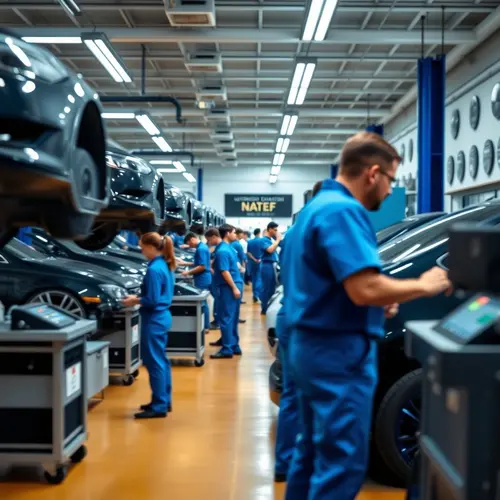
auto repair schools
Auto Repair Schools: 7 Essential Factors That Determine Career Success
Auto repair schools provide specialized training that transforms automotive enthusiasts into certified technicians capable of diagnosing complex vehicle systems. These vocational institutions bridge the gap between basic mechanical knowledge and professional-level competency, offering hands-on curriculum designed around industry-standard diagnostic equipment and repair protocols.
The automotive service industry faces a critical technician shortage, with the Bureau of Labor Statistics projecting sustained demand for qualified professionals. This supply-demand imbalance creates exceptional opportunities for graduates who select the right training program.
Understanding Different Types of Auto Repair Schools
Not all training programs deliver identical outcomes. The institutional structure significantly impacts both educational quality and career trajectory.
Community colleges typically offer Associate of Applied Science degrees with comprehensive curricula spanning two years. These programs integrate general education requirements alongside technical coursework, providing broader academic credentials that enhance long-term career mobility.
Technical institutes focus exclusively on vocational training, condensing instruction into 12-18 month certificate programs. This accelerated approach prioritizes hands-on skill development over theoretical coursework, appealing to students seeking rapid workforce entry.
Manufacturer-specific training centers, operated by brands like Toyota, BMW, or General Motors, prepare technicians for dealer network positions. These programs guarantee alignment with proprietary diagnostic systems and factory repair procedures, though they limit exposure to multi-brand service experience.
Accreditation Standards for Auto Repair Schools
The National Automotive Technicians Education Foundation (NATEF) establishes industry benchmarks for program quality. NATEF-certified schools undergo rigorous evaluation of curriculum content, instructor qualifications, and facility resources.
This accreditation matters because it directly affects ASE (Automotive Service Excellence) certification eligibility. ASE represents the gold standard for technician credentials, and employers consistently prioritize candidates holding these certifications.
Programs without NATEF accreditation may offer lower tuition, but graduates often face extended timelines for professional certification and reduced employer recognition.
Core Curriculum Components That Define Quality Auto Repair Schools
Effective auto repair schools structure coursework around eight fundamental automotive systems. Each requires dedicated instructional time with appropriate diagnostic equipment.
| System Category | Training Focus | Industry Certification |
|---|---|---|
| Engine Performance | Fuel injection, ignition timing, emissions control | ASE A8 |
| Electrical Systems | Circuit diagnosis, computer network analysis, sensor testing | ASE A6 |
| Brakes | Hydraulic systems, ABS diagnostics, disc/drum service | ASE A5 |
| Heating & Air Conditioning | Refrigerant recovery, climate control diagnostics | ASE A7 |
| Manual Drivetrain | Transmission overhaul, clutch systems, differential service | ASE A3 |
| Automatic Transmission | Electronic controls, hydraulic flow, diagnostic procedures | ASE A2 |
| Steering & Suspension | Alignment procedures, electronic steering, wheel bearing service | ASE A4 |
| Engine Repair | Cylinder head service, timing systems, gasket replacement | ASE A1 |
Advanced programs incorporate hybrid and electric vehicle technology, addressing the industry’s technological evolution. This specialized training commands premium compensation as conventional powertrain knowledge becomes insufficient for modern diagnostic work.
Equipment and Facility Resources at Auto Repair Schools
Laboratory infrastructure directly determines skill development quality. Students require access to functional vehicles representing current market demographics—not just obsolete donations.
Professional-grade scan tools like Snap-on Modis, Bosch diagnostic systems, or OEM-specific interfaces provide authentic troubleshooting experience. Schools relying on basic code readers fail to prepare students for real-world diagnostic complexity.
The student-to-bay ratio matters significantly. Programs exceeding 8 students per lift create insufficient hands-on opportunities, forcing excessive observation time rather than direct practice.
Auto Repair Schools – Financial Investment and Return Analysis
Tuition for auto repair schools ranges from $5,000 for basic certificate programs to $35,000 for comprehensive associate degrees. This variance reflects program length, equipment quality, and institutional overhead.
Tool acquisition represents a secondary financial burden often overlooked during program research. Entry-level technicians typically invest $3,000-$8,000 in personal equipment, though many schools offer tool financing or purchase programs.
Financial aid availability through Title IV federal programs provides crucial access for qualified students. Employer-sponsored training through dealership partnerships offers alternative funding models that exchange service commitments for educational sponsorship.
Realistic Salary Expectations After Graduation
Entry-level technicians typically earn $30,000-$40,000 annually during their first two years. This baseline increases substantially as ASE certifications accumulate and diagnostic proficiency develops.
Master-certified technicians with five years experience command $55,000-$75,000 in most markets. Specialized areas like heavy-duty diesel, performance tuning, or European luxury vehicles can exceed $85,000 for experienced professionals.
Geographic location dramatically impacts compensation. Metropolitan markets with higher living costs typically offer correspondingly elevated wage structures, while rural areas provide lower base pay but reduced competition for quality positions.
Career Trajectory Beyond Initial Employment
Graduates from reputable auto repair schools access multiple advancement pathways beyond line technician roles. Service advisor positions leverage technical knowledge with customer communication skills, often providing more favorable work-life balance.
Shop foreman and service manager roles represent natural progressions for technically proficient individuals with leadership aptitude. These supervisory positions typically command 30-50% salary premiums over technician compensation.
Independent shop ownership appeals to entrepreneurial graduates, though it requires business acumen extending beyond mechanical expertise. Successful independents often leverage manufacturer training and dealer experience before launching private enterprises.
Debunking the “Dirty Work” Misconception
Many prospective students dismiss automotive careers based on outdated perceptions of the profession. Modern repair facilities bear little resemblance to the grimy garages of previous generations.
Contemporary technicians spend more time analyzing computer data streams than physically manipulating hardware. Diagnostic work emphasizes critical thinking and systematic troubleshooting over brute-force mechanical ability.
The profession demands continuous learning as vehicle technology evolves. This intellectual challenge attracts problem-solvers who appreciate the diagnostic puzzle inherent in automotive repair.
Critical Questions to Ask When Evaluating Programs
Prospective students should investigate specific program characteristics before committing to enrollment. These inquiries reveal institutional quality and student support structures.
- What percentage of graduates achieve ASE certification within 24 months of completion?
- Do instructors maintain current industry certifications and active repair experience?
- How many operational service bays exist per enrolled student cohort?
- What brands and model years comprise the training vehicle fleet?
- Does the curriculum include hybrid and electric vehicle systems?
- What career placement services and employer partnerships exist?
- Are EPA-required refrigerant certifications included in the program cost?
- What ongoing professional development resources do alumni access?
The Importance of Industry Connections
Strong auto repair schools cultivate relationships with local dealerships and independent repair facilities. These partnerships create internship opportunities and streamline employment transitions.
Advisory boards comprising active industry professionals ensure curriculum relevance. Programs lacking this external input risk teaching obsolete procedures or neglecting emerging technologies.
Job placement rates provide objective program quality indicators. Schools should transparently report employment statistics, including average time-to-hire and starting compensation ranges.
Alternative Pathways to Consider
Apprenticeship programs through dealerships or large independent shops offer earn-while-you-learn models. These arrangements provide immediate income while developing practical skills, though formal classroom instruction may be limited.
Military training through branches like the Army, Navy, or Marines delivers comprehensive mechanical education with zero tuition cost. Veterans then leverage GI Bill benefits for advanced civilian credentials or degree completion.
Online hybrid programs combine remote theoretical instruction with local hands-on laboratory sessions. This format accommodates working adults but requires exceptional self-discipline and time management.
Making the Final Decision
Selecting from available auto repair schools requires evaluating personal learning preferences, financial constraints, and career timeline expectations. No single program type universally suits all students.
Campus visits reveal facility conditions, equipment quality, and instructional atmosphere that promotional materials cannot convey. Observing actual classes and speaking with current students provides unfiltered program insights.
Successful automotive careers begin with informed educational choices. Graduates who invest time researching program quality, understanding certification pathways, and aligning training with market demands position themselves for sustained professional success in this essential skilled trade.