Automobile salary levels decide whether this trade fits your goals: what does the industry really pay? When people search for salary information, they’re often looking beyond a single number. They’re seeking the truth about compensation structures, long-term viability, and the path to financial growth in a sector that blends engineering, sales, service, and management. The answer isn’t simple, as pay varies dramatically between the showroom floor, the service bay, and the corporate office.
Understanding your potential earnings requires a clear map of the industry’s landscape. Compensation is rarely just a base paycheck. It’s frequently a complex equation of commission, bonus structures, profit-sharing, and manufacturer incentives. This variable pay model can lead to significant income swings, making financial planning distinct from more predictable salaried professions.
Deconstructing the Salary Spectrum
Earnings are directly tied to your role and its proximity to the revenue stream. Front-line positions like sales and service advisors often have the highest variable components, while technical and corporate roles skew toward stable base pay with performance bonuses.
The Automobile Salary-Driven Roles: Sales and Finance
For sales consultants, the advertised pay is typically a modest base, sometimes called a “draw,” against commissions. Real income comes from unit bonuses, finance and insurance (F&I) penetration, and manufacturer “spiffs” for moving specific models. Top performers can outearn their base by multiples, but it requires consistent performance. The National Automobile Dealers Association (NADA) often publishes benchmarks showing that high-volume performers in major metropolitan markets can achieve earnings significantly above the national median for retail roles.
The Technical Tracks: Automobile Salary – Service and Repair
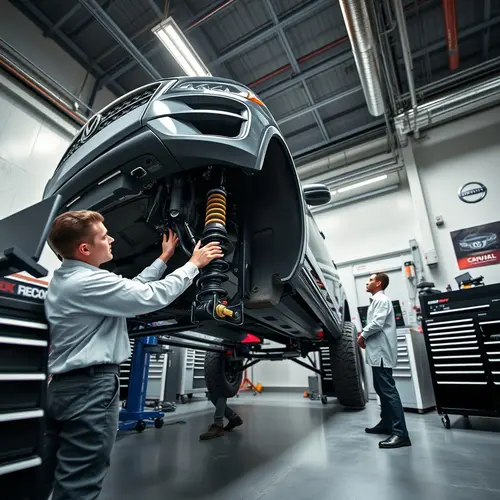
Technicians and mechanics usually operate on a flat-rate system. They are paid a set amount for each job as defined by a service manual (e.g., 1.2 hours for a brake job), regardless of how long it actually takes. A master technician who works efficiently can earn well by “beating the clock.” This system rewards speed, skill, and certification. According to guidelines from the ASE (National Institute for Automotive Service Excellence), certification in specific areas directly correlates with higher flagged hours and, consequently, higher pay.
Role Category
Primary Pay Structure
Key Income Drivers
Income Stability Profile
Sales & F&I
Low Base + Commission
Unit volume, F&I product sales, customer satisfaction scores
Project success, company performance, individual performance reviews
Very high
The Myth of the “Easy” Automobile Salary High Earner
A common misconception, often perpetuated by anecdotal stories, is that anyone can walk into a sales role and immediately command a six-figure automobile salary. This is a dangerous oversimplification. The initial months often involve building a client pipeline, learning complex product details, and navigating stringent compliance regulations for F&I. Income in this period can be lean. Real high earners cultivate repeat business, master follow-up systems, and build a reputation that generates referrals.
Furthermore, reports from industry analysts at firms like J.D. Power highlight the increasing impact of non-monetary compensation on employee retention and satisfaction. Exceptional health benefits, retirement contribution matches, and continuous training programs are critical components of total compensation that aren’t reflected in the raw automobile salary figure.
Expert Automobile Salary: The Equity vs. Income Trade-Off
Here’s a perspective often missed in pure salary discussions. Many professionals fixate on the immediate commission check but neglect building equity. Consider two service advisors: one jumps between dealerships for a slight pay bump, while another stays, builds a loyal client book, and eventually transitions into fixed operations management with equity stake potential. Over a decade, the second path, while perhaps showing slower initial salary growth, often leads to greater net worth through profit-sharing and ownership opportunities. True wealth in this industry isn’t just about your automobile salary; it’s about converting your earned income and reputation into a vested interest in the business’s success.
Navigating Your Path to a Better Package
To strategically improve your compensation, you need a plan that addresses both skills and negotiation.
Certify Everything. In technical roles, every ASE certification has a tangible return. In sales, manufacturer certifications (like Ford’s or Toyota’s elite programs) make you more valuable to the dealership and to clients.
Quantify Your Value. Before any review or job change, document your metrics: units sold, customer satisfaction index scores, efficiency ratings, or cost-saving initiatives you implemented.
Understand the P&L. Learn how your role affects the dealership’s profit and loss statement. A service advisor who understands the gross profit on parts and labor is better positioned to argue for a share of it.
Look at the Full Package. Negotiate on more than base pay. Consider benefits, vacation time, training budgets, and clear, written paths to bonus and promotion thresholds.
The pursuit of a strong automobile salary is ultimately a marathon, not a sprint. It demands technical proficiency, business acumen, and the resilience to manage variable income. By focusing on building verifiable value, seeking credible certifications, and understanding the broader business mechanics, you can move from simply earning a wage to commanding a compensation package that reflects your true worth to the automotive ecosystem.
Start by listing the tasks that eat most of your week. Rank them by time cost, then match each one to a feature on your shortlist. Ask vendors for a live demo using your own data, not a canned sample. Check reviews from teams of your size, since enterprise feedback can mislead. Finally, test one option with a small pilot group before rolling it out to everyone.
Common Mistakes to Avoid
The biggest mistake is buying for features you will never use. Keep the stack lean and master the basics first. Another trap is skipping training, which leaves half the value on the table. Schedule one short session per week until the team is fluent. Review usage numbers monthly and drop tools nobody opens.